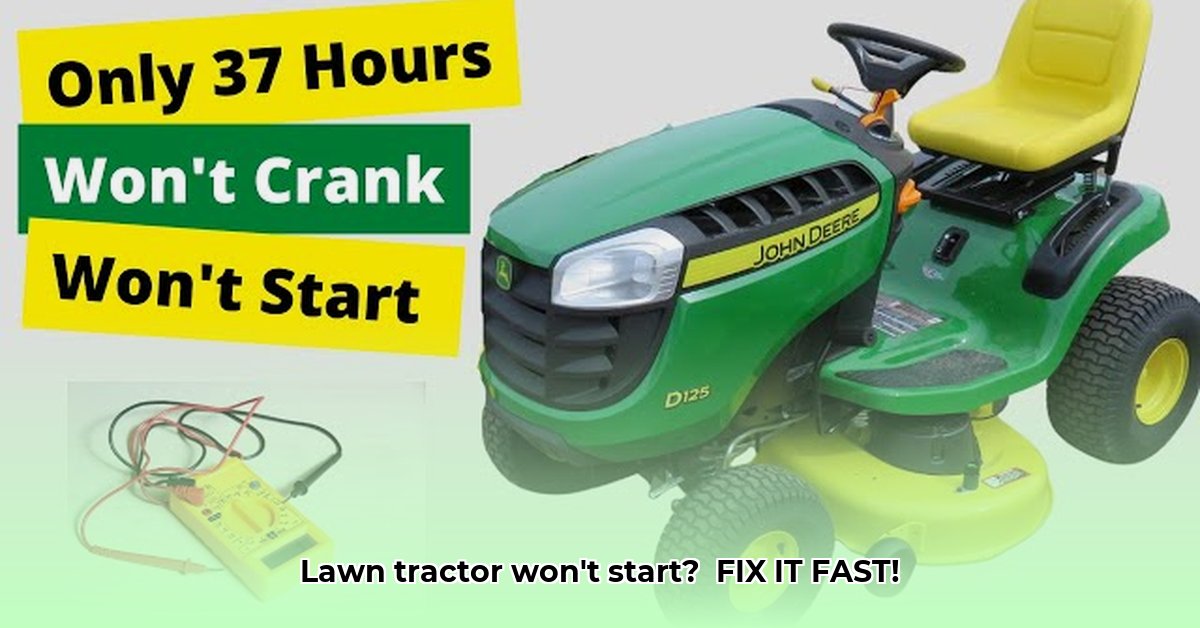
So, your lawn tractor has decided to take a break? Don't despair! This guide will help you diagnose and fix the most common starting problems, from simple fixes to more involved repairs. We'll cover fuel issues, ignition problems, and more, with clear steps and helpful visualizations (Note: Images and videos would be included here). For more in-depth troubleshooting, check out this comprehensive guide.
1. Fuel System: Is Your Tractor Getting Enough Gas?
Old gas is a frequent culprit. Let's start with fuel checks.
Step 1: Check the Fuel Level. Is there any gas in the tank? This might seem obvious, but it's the first thing to check!
Step 2: Inspect the Fuel Line. Examine the fuel line running from the tank to the engine. Look for cracks, kinks, or clogs. A damaged line prevents fuel from reaching the engine. Clean any debris from the fuel filter if necessary.
Step 3: Check Fuel Freshness. Does the gas look or smell old? Old fuel can cause starting issues. Properly dispose of old fuel (check local regulations) and refill with fresh, high-quality gasoline. Avoid E15 or E85 fuel. Adding a fuel stabilizer can extend fuel life.
Step 4: (Optional) Fuel Pump Check. If comfortable, test the fuel pump. Consult your owner's manual for specific instructions on your model. This may require additional tools.
2. Ignition System: Is There a Spark?
If the fuel system checks out, let's move to the ignition system.
Step 1: Inspect the Spark Plug. Carefully remove the spark plug (disconnect the wire first!). Check for corrosion, fouling (carbon buildup), or wear. Replacing worn plugs is inexpensive and often resolves starting problems. Ensure the correct gap, found in the owner's manual.
Step 2: Check the Spark Plug Wire. Inspect the wire for cracks or fraying. Damage to this wire can interrupt the spark, preventing the engine from starting. Ensure connections are secure.
Step 3: (Advanced) Test the Ignition Coil. Testing the ignition coil requires a multimeter and is more involved. This is recommended only for those with electrical system diagnostic experience. A malfunctioning coil can prevent starting. Consult your owner's manual.
3. Air Filter: Is Your Engine Breathing?
A clogged air filter restricts airflow, hindering engine performance.
Step 1: Check and Clean the Air Filter. Locate and remove the air filter. Clean it with compressed air (blowing outward) if lightly dusty. Replace it if heavily soiled. A clean air filter is crucial for efficient engine operation.
4. Battery Power: Does Your Tractor Have Enough Juice?
A weak or dead battery prevents starting.
Step 1: Inspect Battery Terminals. Check for corrosion and clean with a wire brush or terminal cleaner. Ensure connections are tight and secure.
Step 2: Test Battery Voltage. Use a multimeter to check the battery voltage. It should be around 12 volts or higher. Lower voltage suggests a weak battery needing recharging or replacement.
5. Safety Switches: Are All Systems Go?
Safety switches prevent accidental starting.
Step 1: Check Safety Switches. Check all safety switches, including the seat switch, blade engagement switch, and any others specific to your model. These often get overlooked.
6. More Advanced Troubleshooting
If the above steps don't resolve the issue, consider these more involved problems:
- Carburetor Problems: A clogged or malfunctioning carburetor needs cleaning or replacement. This is more complex and may require specialized tools.
- Flywheel Alignment: Misaligned flywheels can disrupt starting. This requires professional attention.
- Other Mechanical Issues: Underlying mechanical issues might need professional diagnosis and repair.
Preventative Maintenance: Keep Your Tractor Running Smoothly
Regular maintenance prevents many starting problems.
| Task | Frequency | Notes |
|---|---|---|
| Change Engine Oil | Annually or as needed | Check your owner's manual for recommendations. |
| Clean Air Filter | Every 25 hours of use | More frequent cleaning may be needed |
| Inspect Spark Plugs | Every 50 hours of use | Replace if worn or fouled |
| Check Battery Terminals | Monthly | Maintain clean connections. |
| Check Fuel Lines | Annually or as needed | Inspect for cracks and leaks. |
Remember to dispose of old gasoline properly, following local regulations.
We hope this guide helps! If problems persist, consult your owner's manual or a small engine repair technician.